


BBL Laser for Redness: How Light Therapy Helps Calm Visible Skin Redness
By Partington Plastic Surgery on June 10, 2026 in BBL
Persistent facial redness is one of the most frustrating skin concerns to live with – not because it’s dangerous, but because it’s so visible and so difficult to address with conventional skincare alone. Rosacea flares, broken capillaries, sun-induced flushing, post-inflammatory redness: these conditions don’t respond to moisturizers or topicals the way other skin concerns do. They require a treatment that works at the vascular level.
BBL (BroadBand Light) therapy is one of the most effective options available for visible redness, and it’s a treatment we use regularly at Partington Plastic Surgery and Laser Center. This article explains what BBL is, why it’s effective for redness specifically, what the treatment process looks like, and what kind of results are realistic.
What Is BBL?
BBL – BroadBand Light – is an intense pulsed light (IPL) technology developed by Sciton®. It delivers precise wavelengths of light energy to the skin, targeting specific chromophores: the pigment and vascular components within the skin that produce discoloration.
Unlike laser treatments that use a single wavelength, BBL uses a broad spectrum of light that can be filtered to target specific skin concerns. For redness, the relevant wavelengths target oxyhemoglobin – the compound in red blood cells that gives vessels their color. When light energy is absorbed by oxyhemoglobin in visible capillaries, it generates heat that causes those vessels to collapse and be reabsorbed by the body, reducing visible redness.
At Partington Plastic Surgery and Laser Center, we use Sciton® BroadBand Light – one of the most studied and respected BBL platforms available. The technology is backed by extensive clinical research and has a long track record for safety and efficacy across skin types.
What Causes Visible Facial Redness?
BBL for redness is effective because it addresses the underlying vascular cause, but different sources of redness have somewhat different mechanisms:
Rosacea: A chronic inflammatory skin condition characterized by persistent flushing, visible blood vessels (telangiectasia), and sometimes pustular breakouts. Rosacea cannot be cured, but its visible vascular component – the redness and broken capillaries – responds well to BBL. Regular treatments can significantly reduce baseline redness and flush intensity.
Telangiectasia (broken capillaries): Small, dilated blood vessels that become visible at the surface of the skin – commonly on the nose, cheeks, and chin. Often triggered by sun exposure, temperature changes, alcohol, or genetics. BBL targets these vessels directly, causing them to collapse and fade.
Sun-induced flushing and erythema: Cumulative UV damage affects the skin’s vascular architecture, producing chronic redness and uneven tone. BBL addresses both the vascular and pigment components of sun damage simultaneously.
Post-inflammatory erythema (PIE): The pink-red marks left after acne or other inflammatory skin events. These are dilated capillaries in the post-healing process. BBL can accelerate their resolution.
Diffuse facial redness: Some patients have a generally red or ruddy complexion without a specific diagnosis. BBL addresses the underlying dilated vessels responsible for this overall redness.
Smooth.
Bright.
Confident.
- BBL® (improve discoloration & pigmentation)
- Halo® (improve lines, wrinkles & texture)
- SkinTyte® (improve loose skin & collagen production)
How BBL Laser Redness Treatment Works
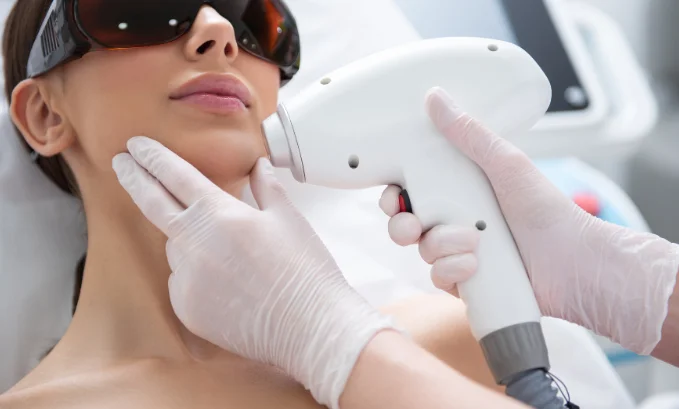
A BBL treatment session at Partington Plastic Surgery and Laser Center is an in-office procedure that takes approximately 30–45 minutes. No anesthesia is required; most patients experience a mild snapping sensation as each pulse is delivered.
Before the treatment: The skin is cleansed, and protective eye shields are placed. A topical numbing cream can be applied if the patient prefers, though most find the treatment well-tolerated without it.
During the treatment: The provider moves the BBL handpiece across the treatment area, delivering light pulses according to the patient’s specific skin concern and the settings calibrated for their skin type. Specific wavelength filters are selected to target redness.
Immediately after: The skin may appear flushed or slightly pink immediately after treatment. Some patients see the targeted vessels become temporarily darker before they begin to fade – this is a normal response that resolves within days.
Recovery: BBL for redness has minimal downtime. Most patients return to normal activities the same day, though sun protection is important in the days following treatment. Makeup can typically be applied within 24 hours.
Results: What to Expect
Results from BBL for redness depend on the specific condition being treated, the degree of redness, and the number of treatments performed.
Single treatment: Even one treatment often produces noticeable reduction in visible vessels and overall redness. For mild to moderate concerns, a single session can be sufficient.
Series of treatments: For more significant rosacea, extensive telangiectasia, or substantial sun damage, a series of 2–4 treatments spaced 4–6 weeks apart typically produces the most comprehensive improvement.
Maintenance: Conditions like rosacea are chronic – new vessels can develop over time, and triggers (sun, heat, alcohol) can cause flares. Maintenance treatments 1–2 times per year help sustain results for patients with ongoing rosacea or a tendency toward visible capillaries.
What doesn’t change: BBL for redness addresses vascular redness. It does not change skin texture, address deep scarring, or treat all forms of discoloration. For patients with both redness and textural concerns, BBL can be combined with HALO® laser or other treatments at Partington Plastic Surgery and Laser Center – though this is planned as a separate treatment event.
BBL Redness vs BBL for Other Skin Concerns
BBL is used at Partington Plastic Surgery and Laser Center for multiple skin concerns, each using different wavelength settings:
- Redness and vascular concerns: Wavelengths that target oxyhemoglobin in blood vessels
- Brown spots and pigmentation: Wavelengths that target melanin in pigmented lesions
- Skin tone and overall rejuvenation: Combination settings addressing both vascular and pigment components
- BBL HERO™ (high energy rapid output): A faster-delivery version for full-face treatments
A common question is whether BBL and HALO® laser are the same treatment. They are not. HALO® is a hybrid fractional laser that addresses textural concerns – fine lines, pores, surface quality. BBL is a light-based treatment that addresses vascular and pigment concerns. They are complementary technologies that can be sequenced to address multiple aspects of skin quality, but each does something distinct.
Who Is a Good Candidate for BBL Redness Treatment?
BBL for redness is appropriate for:
- Patients with rosacea who have persistent facial redness and visible capillaries
- Patients with isolated broken capillaries on the nose, cheeks, or chin
- Patients with post-acne redness (PIE)
- Patients with sun-damaged skin showing redness and uneven tone
- Patients with overall ruddy complexion who want a more even skin tone
BBL is generally safe for lighter to medium skin tones. For deeper skin tones, specific protocols and settings are used; a consultation will assess appropriateness.
Patients who are actively tanned, pregnant, or on certain photosensitizing medications are not appropriate candidates at the time of treatment.
BBL at Partington Plastic Surgery and Laser Center
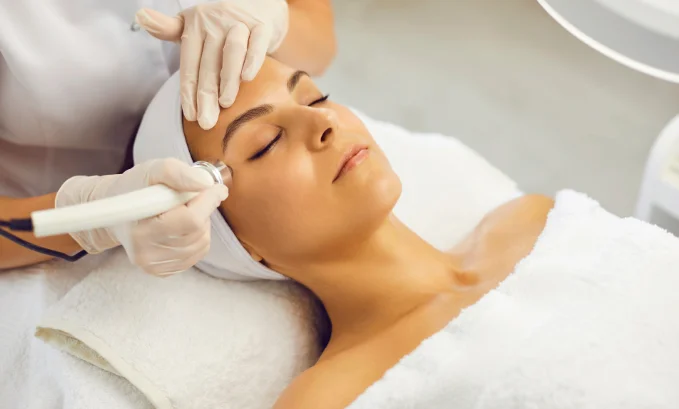
At Partington Plastic Surgery and Laser Center, skin treatments including Sciton® BroadBand Light are performed in our MedSpa – SUBSPA – by experienced providers. Treatments are planned based on a thorough skin evaluation, with settings calibrated for your specific skin type and concern.
For patients dealing with facial redness, BBL is one of the most effective tools available – it addresses the source of the redness directly, produces visible results with minimal downtime, and can be maintained long-term.
Schedule a skin consultation →
Frequently Asked Questions
How many BBL treatments do I need for redness?
For mild redness or isolated capillaries, 1–2 treatments are often sufficient. For significant rosacea or extensive vascular damage, 3–4 treatments spaced 4–6 weeks apart typically produce the best outcomes. Maintenance treatments 1–2 times per year help sustain results.
Does BBL hurt?
Most patients describe the sensation as a mild snapping or rubber-band feeling as each pulse is delivered. It is well-tolerated by most people without topical numbing. Treatments include a cooling mechanism that reduces discomfort.
How long do BBL redness results last?
For broken capillaries that are treated directly, results can be long-lasting – the collapsed vessel is gone. For rosacea, which is a chronic condition, new vessels can develop over time; periodic maintenance treatments sustain the improvement.
Can BBL make redness worse?
Immediately after treatment, the skin may be slightly flushed. Some targeted vessels become temporarily darker before fading – this is the normal treatment response, not a worsening. This resolves within a few days.
Is BBL the same as a laser?
No. BBL uses broad-spectrum pulsed light rather than a single-wavelength laser beam. Both technologies can address vascular concerns, but BBL’s adaptable wavelength spectrum makes it particularly versatile for different types of redness and skin tone combinations.
What’s the difference between BBL and HALO®?
BBL targets vascular and pigment concerns using light energy. HALO® is a hybrid fractional laser that addresses texture, fine lines, pores, and skin surface quality. They work on different aspects of skin health and are often used in a complementary sequence.
References
- Weiss RA, Weiss MA, Beasley KL. “Rejuvenation of photoaged skin: 5 years results with intense pulsed light of the face, neck, and chest.” Dermatologic Surgery. 2002;28(12):1115–1119. PubMed
- Goldberg DJ. “Current trends in intense pulsed light.” Journal of Clinical and Aesthetic Dermatology. 2012;5(6):45–53. PubMed
- Chang AL, Koo JY, Maibach HI. “New physical therapies for rosacea.” Journal of Drugs in Dermatology. 2005;4(1):63–66. PubMed
- Sciton®. “BroadBand Light (BBL) Technology Overview.” Sciton.com
- Wat H, Wu DC, Rao J, Goldman MP. “Application of intense pulsed light in the treatment of dermatologic disease: a systematic review.” Dermatologic Surgery. 2014;40(4):359–377. PubMed